Fairwork is a research initiative by the WZB Berlin Social Science Center and the Oxford Internet Institute that assesses working conditions in the platform economy worldwide, from food delivery services to ride hailing and freelance platforms. While Fairwork was already recognised as an established research standard, its support base consisted almost exclusively of institutional stakeholders from academia, policymaking and civil society.
For Fairwork, I developed and delivered an international B2B & B2C campaign to expand this base to consumers and businesses, from audience analysis and a modular campaign framework to operational implementation.
Following a joint kick-off workshop with the Fairwork team, I developed a persona-based audience segmentation framework covering demographic and psychographic characteristics, media behaviour and audience needs. This included both audiences Fairwork was already reaching, such as platform workers and academic communities, and new target groups.
Based on this analysis, I defined the priority campaign audiences by age, geographic focus at country and city level, socioeconomic profile and channel use. I then developed a key-message framework comprising question-and-statement pairings designed for clarity and memorability using the SUCCESs framework by Heath & Heath. The messages were adapted for individual audience segments and local markets.
Building on this audience analysis and messaging foundation, I created three alternative campaign strategy options, each with its own positioning, campaign line and primary KPI: building awareness of Fairwork ratings, securing commitment to a code of conduct, or maximising petition signatures. The resulting modular framework enabled the Fairwork team to select, combine and adapt individual elements as needed.
The kick-off workshop identified several potential campaign objectives. I translated the audience analysis and messaging framework into three distinct campaign strategy options, each with its own campaign line, core messages, call to action and primary KPI:
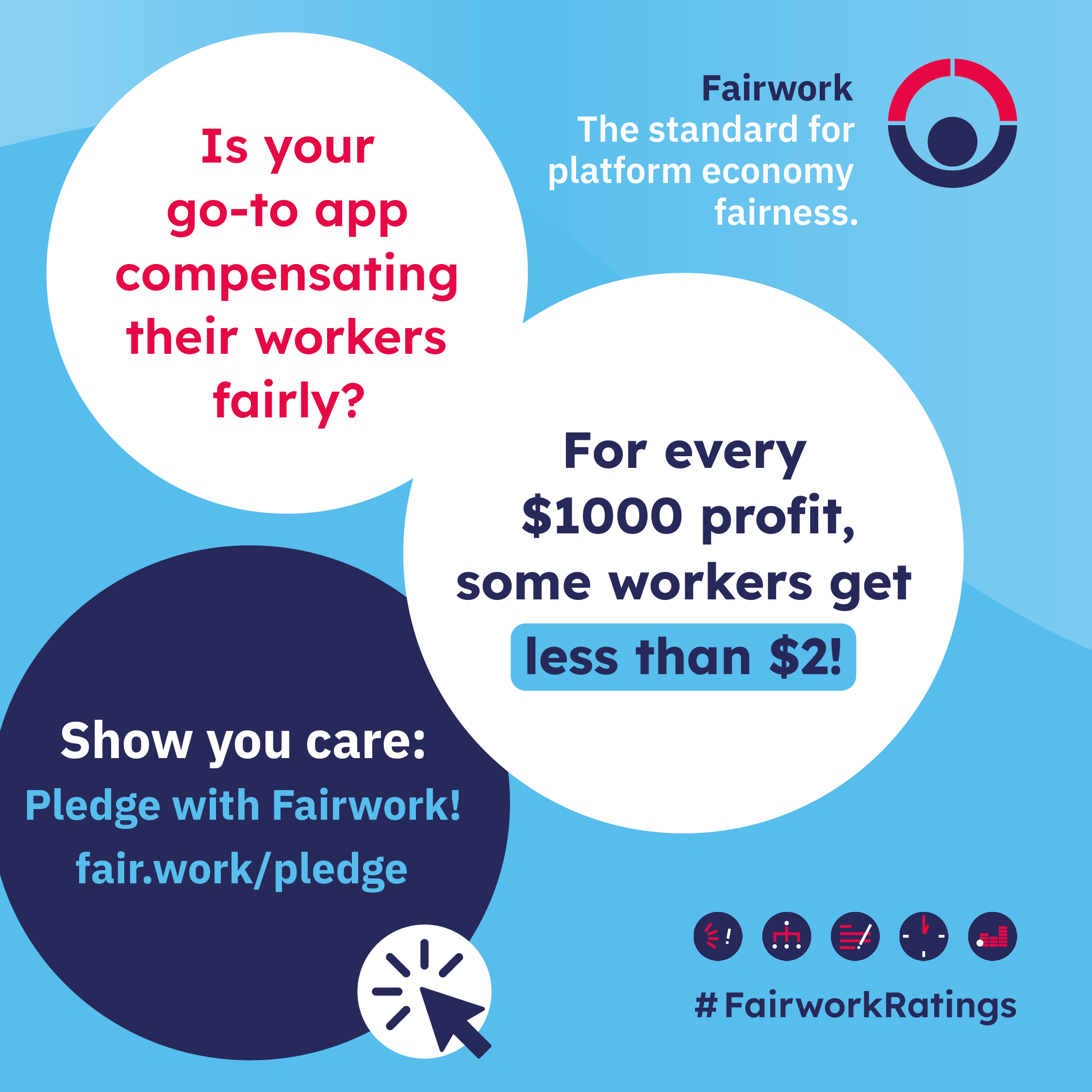
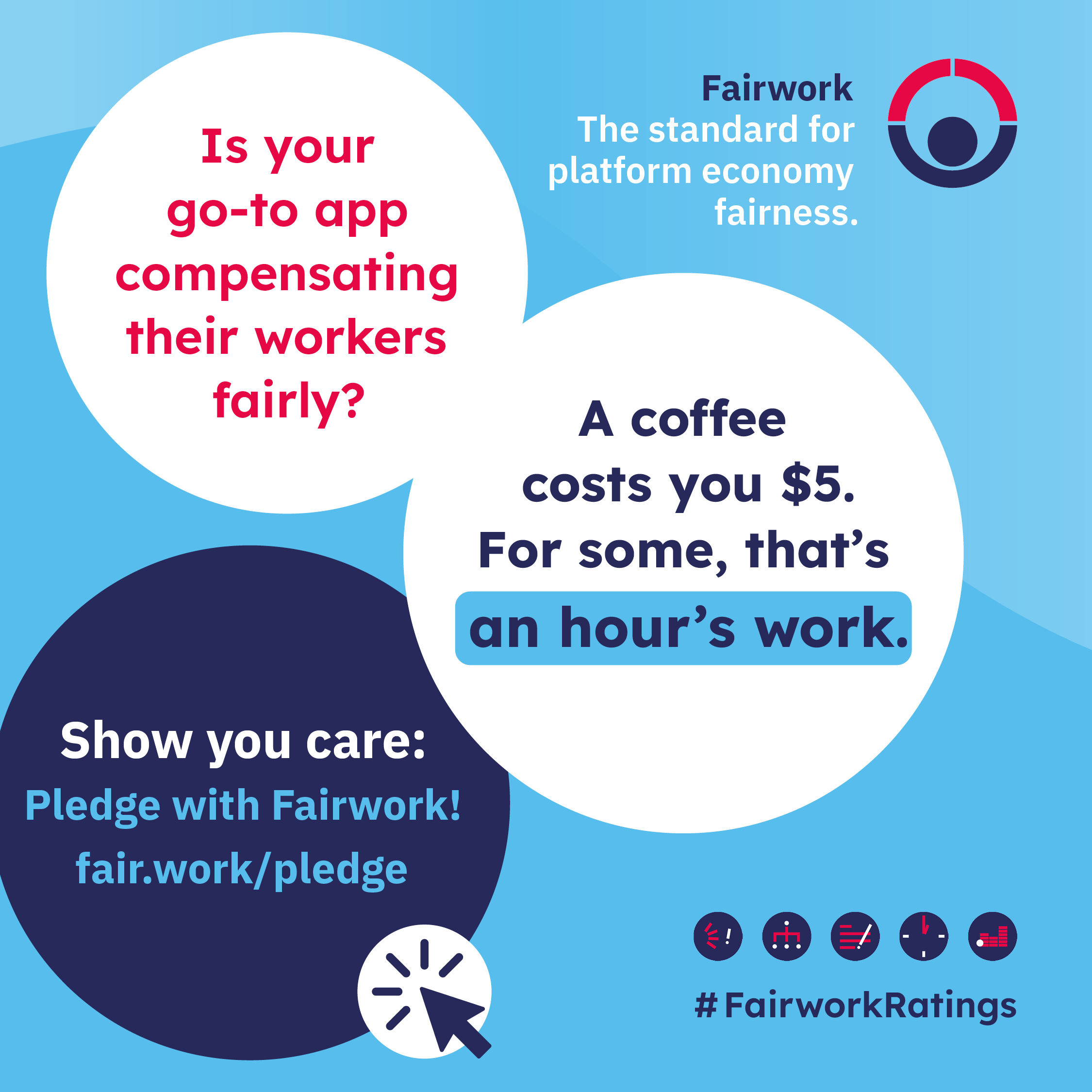
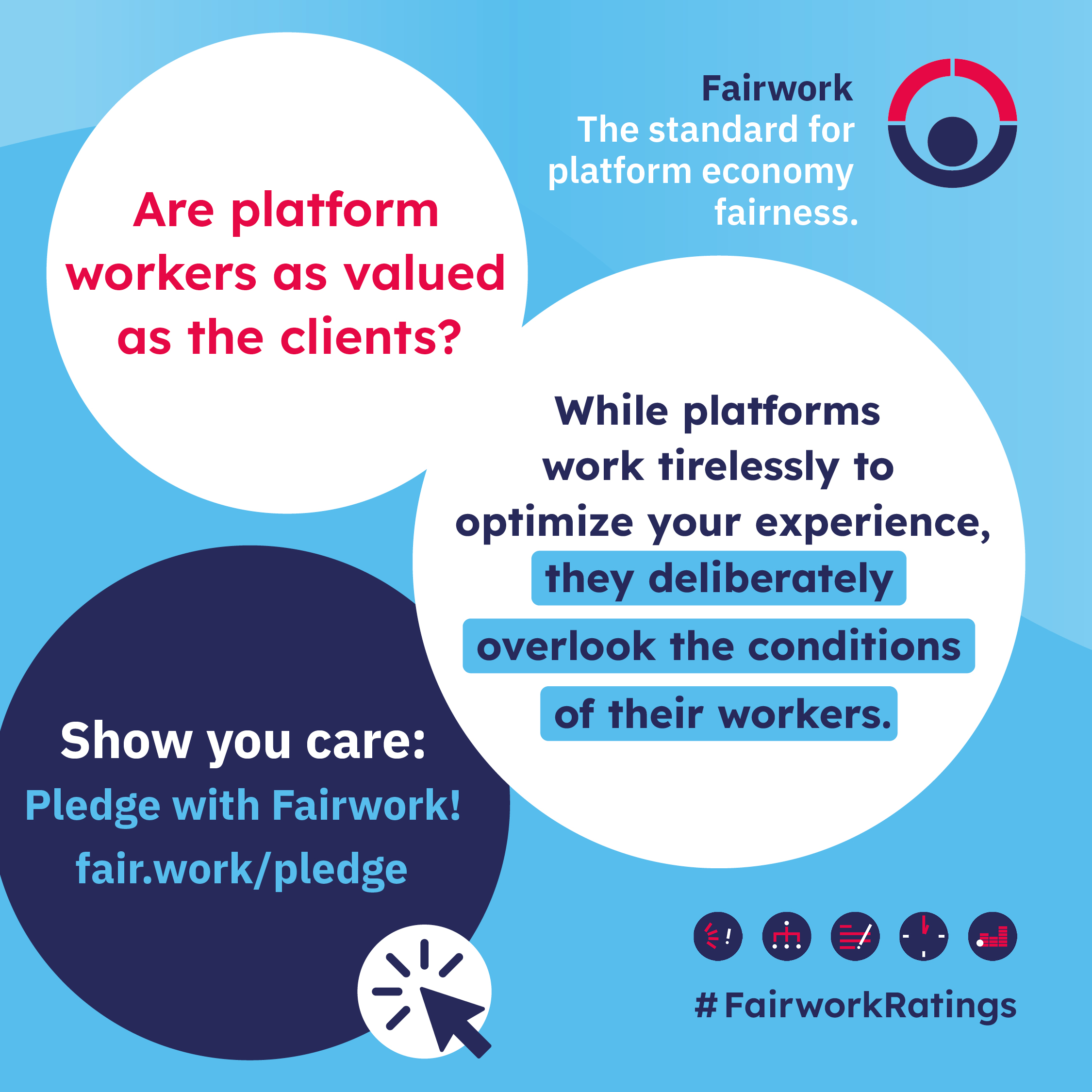
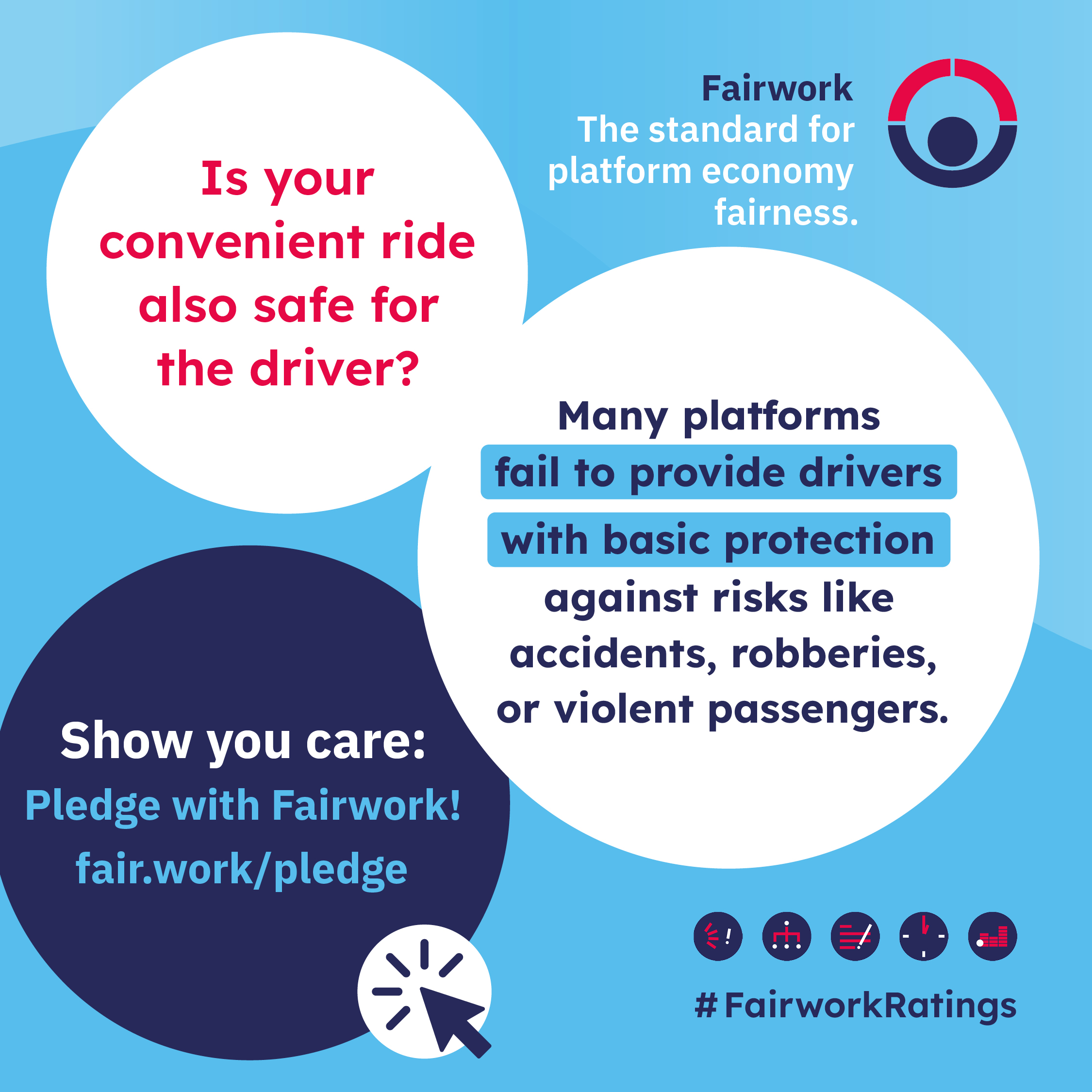
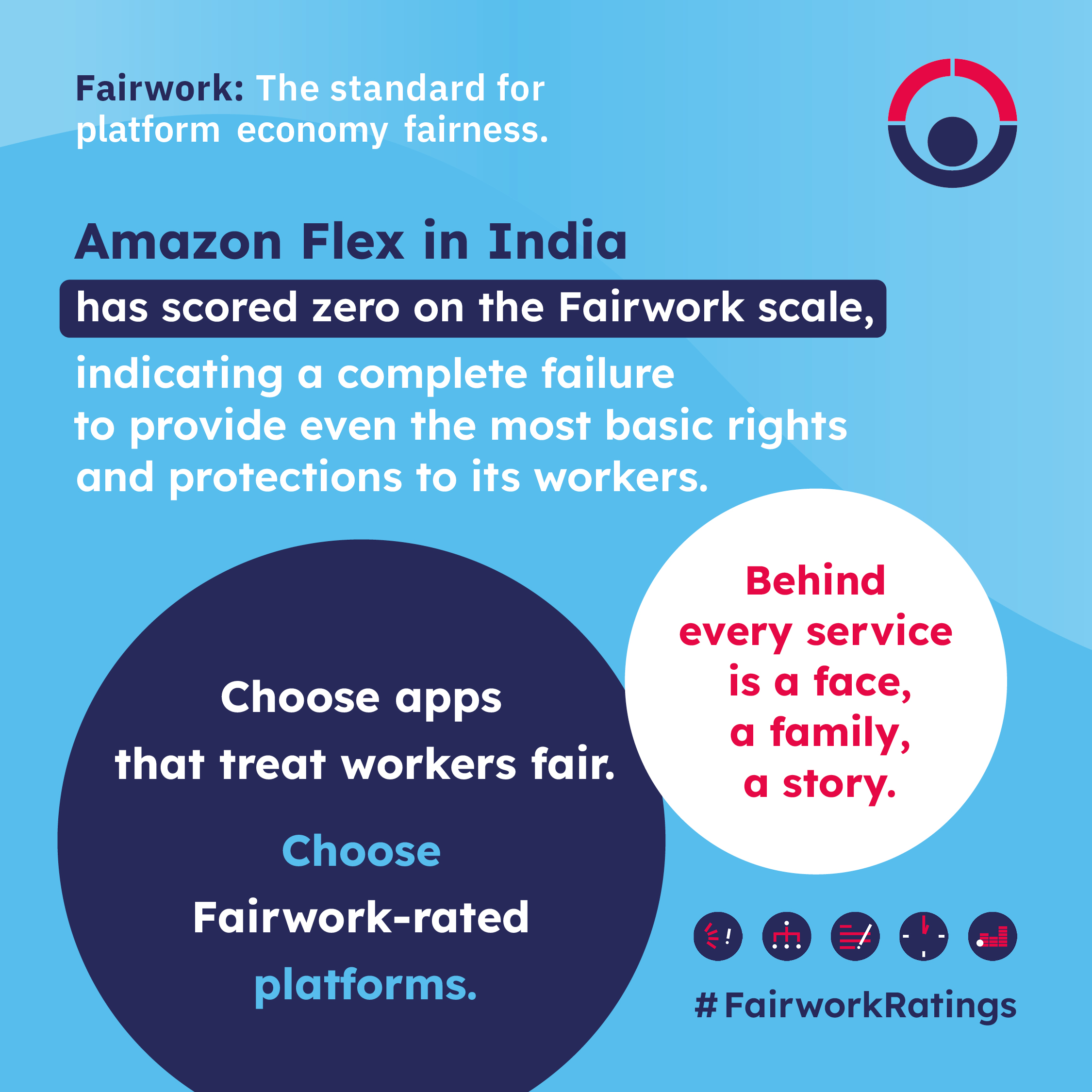
- Option 1: Building awareness of Fairwork ratings: This option aimed to establish the ratings as a recognised reference point in consumers’ purchasing decisions. For each Fairwork principle, the core messaging centred on a clear question-and-statement pairing, for example, “Is your go-to app compensating its workers fairly?”, with calls to action inviting audiences to take a pledge or check the ratings.
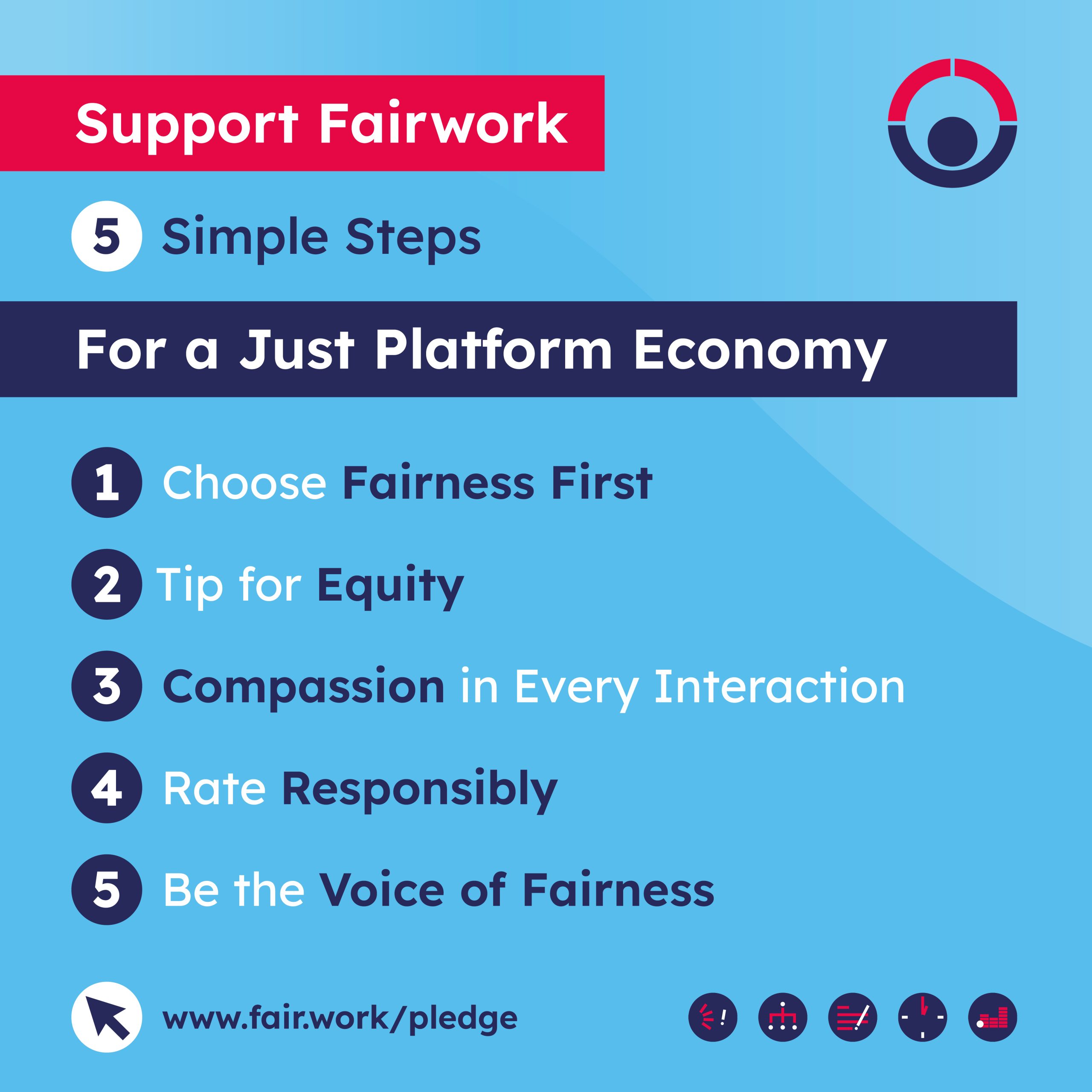
- Option 2: Commitment through a code of conduct: This option focused on building an active supporter base. Consumers were invited to commit to a five-point code of conduct, including choosing fairer platforms, tipping appropriately and leaving respectful reviews, and to share that commitment publicly on social media.
- Option 3: Generating reach through petition signatures: This option aimed to build public and political pressure by securing the highest possible number of signatures. “5 Simple Steps” served as the central, easily shareable campaign line, linked to a clear and measurable success metric.
For the campaign rollout, I developed a detailed supporter journey across the following stages: Awareness → Education → Empathy & Alignment → Advocacy → Action → Continued Engagement. It included a channel strategy for Instagram, TikTok, LinkedIn, YouTube, Facebook and email, as well as defined touchpoints for each stage, from the first interaction with an Instagram Story through to signing the petition and continued engagement afterwards.
- Content toolkit & messaging frameworks to communicate the Fairwork principles consistently across channels
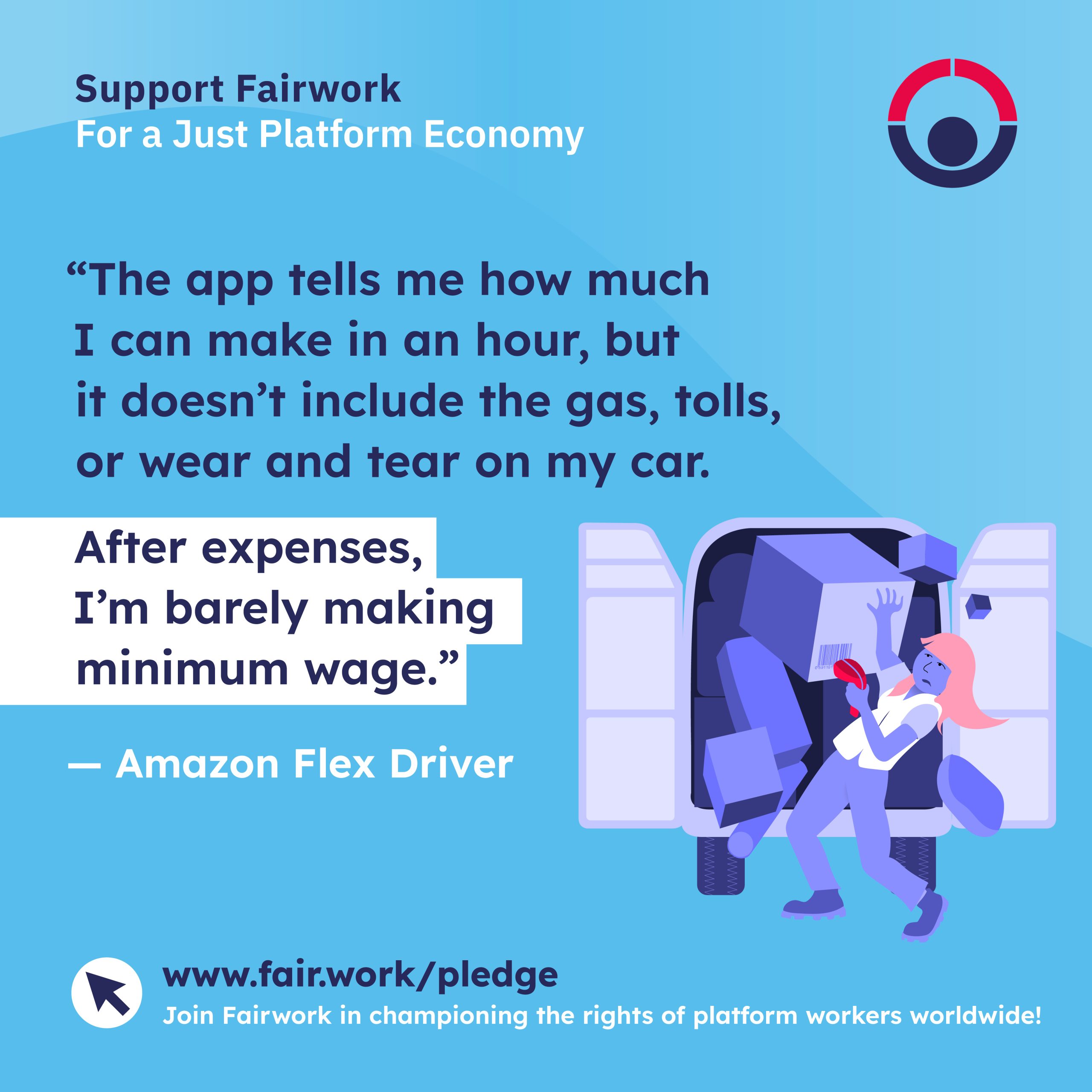
- Social media campaign with audience-specific storytelling and shareable visual-content concepts
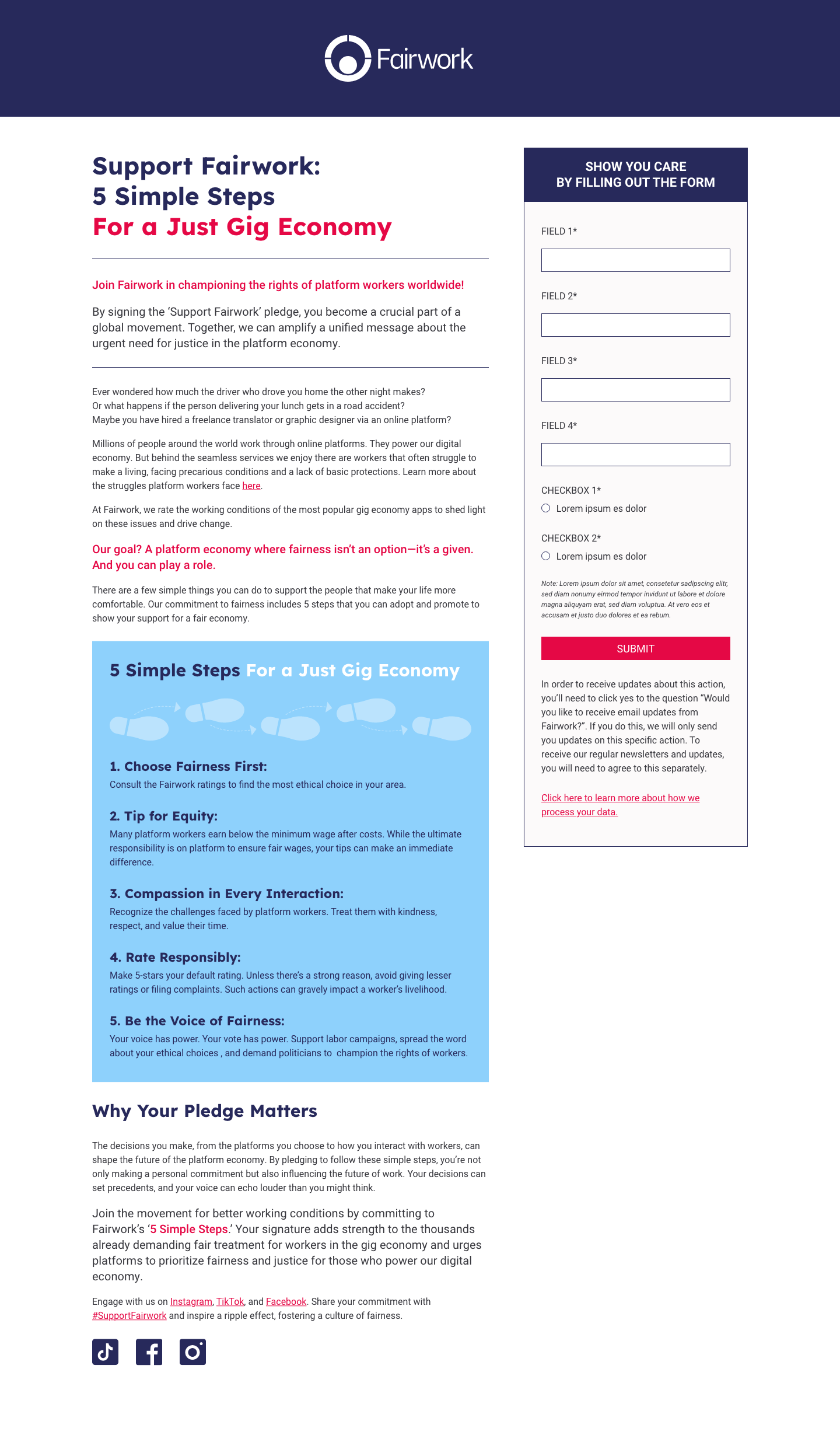
- Petition landing page (Action Network), including copywriting and page structure
- Email marketing toolkit for follow-up communications with partners and universities
- Editorial calendar to coordinate posts, Stories and petition updates throughout the campaign period
- GDPR-compliant B2B contact database
Effective campaigns depend on close collaboration with the team, a clear mission, a deep understanding of the target audience and agile processes. Fairwork demonstrated this particularly clearly: it was not only the campaign that emerged from the work that could be adapted across countries; the strategy itself was modular and robust enough to work across national contexts.